

..and then I slayed the dragon.
Action RPGs are a lot like a crowded tavern. Walk through the door and you will see the usual suspects already planted at the bar. Loot explosions, skill trees that look like electrical wiring diagrams, and enemies that exist mostly to be turned into colorful confetti. Dragonkin: The Banished steps into that room with confidence, dragon blood on its boots and a few clever ideas in its backpack. The question is whether those ideas are enough to stand out in a genre that already has giants casting very long shadows.
All of these games have big bads, Diablo has… well Diablo, Path of Exile has Kitava, the Insatiable and Titan Quest has Typhon and in Dragonkin players will be fighting to rid the world from Dragons. Players will choose from one of four different dragon hunters, melee-focused Barbarian, the Oracle who uses lighting magic, The Knight who has a fire spear and works as a tank and finally the stealthy ranged Tracker for those who want to poison enemies from afar. Don’t expect any ability to really create a character, the races and things have all been selected on the chosen classes.
MSRP: $39.99
Platforms: Xbox (reviewed), PlayStation, PC
Price I’d Pay: $39.99
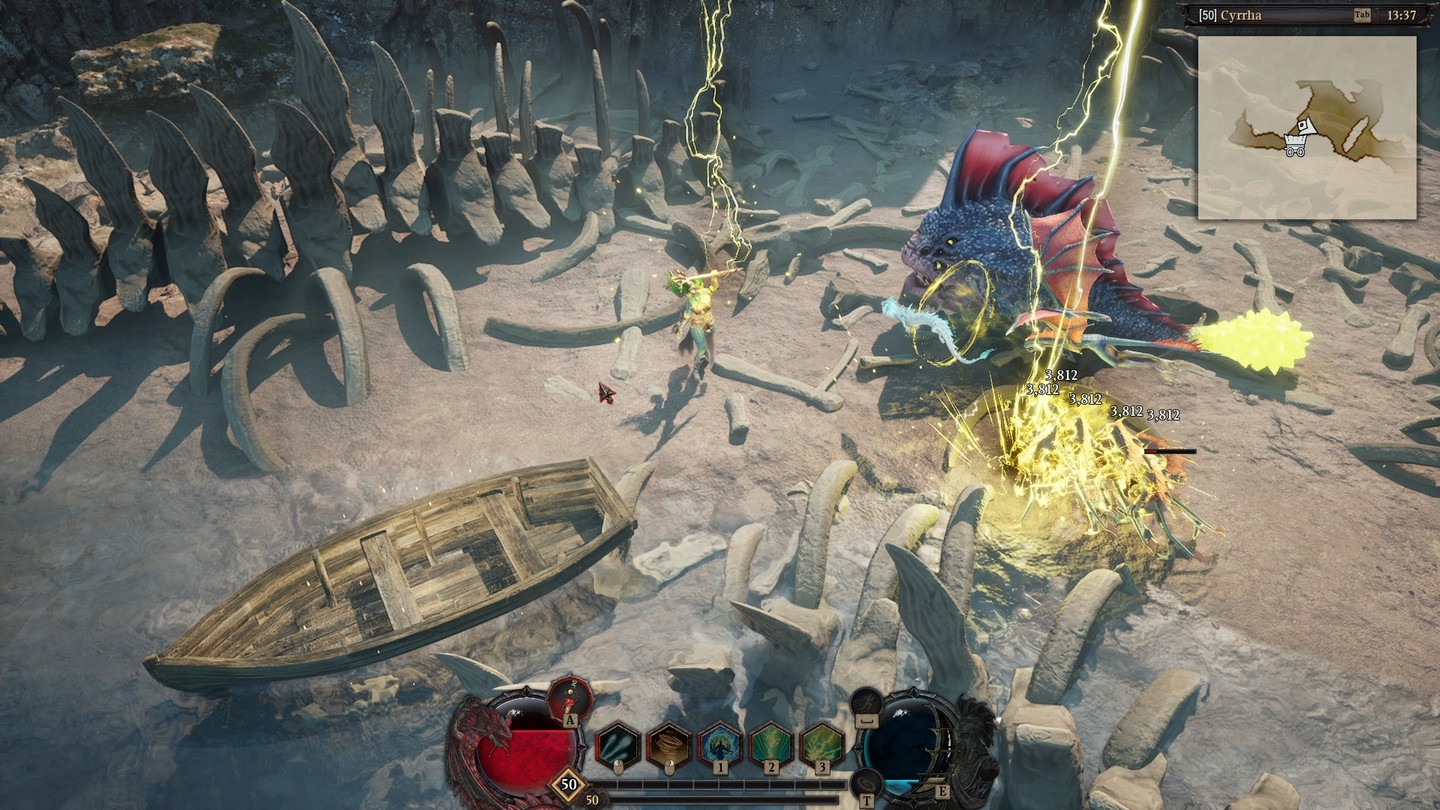
Combat in Dragonkin lands somewhere between weighty and chaotic. I only played the melee class for a bit but it felt heavier than the Barbarian in Diablo. Most of my play time was with the Oracle because I am a sucker for anyone who can throw lighting. Normal attacks locked on to enemies as does the abilities, however players are able to aim those with the right stick if they would prefer. Just as in Diablo players will mix together their normal attacks and abilities to mow down enemies who will thing explode into loot. ‘Explode’ isnt exactly true, unlike Diablo where enemies turn into “loot showers” upon death, here they will usually drop some gold, maybe one or two items at most. I appreciate that the game isn’t trying to be a carbon copy of some of the bigger action RPGs out here.
In fact, where Dragonkin tries to separate itself is through its progression system. Instead of the usual type of ‘spidery legged’ skill trees Dragonkin is using what they call the Ancestral Grid. In addition to the weapons and potions that can drop from enemies, there will also be fragments that can be slotted into the grid. These fragments come in a few flavors, one type is the abilities and players can only slot 5 of them at a time. The others add effects like shortening cooldown time and more not only that these can all be arranged to line up and touch so that they amplify their effects. I know this sounds overly complicated but I promise its much easier putting it into practice. I found it a very cool way to set up character builds, and it made it so that I wasn’t chasing stats on my gear but instead on the fragments.
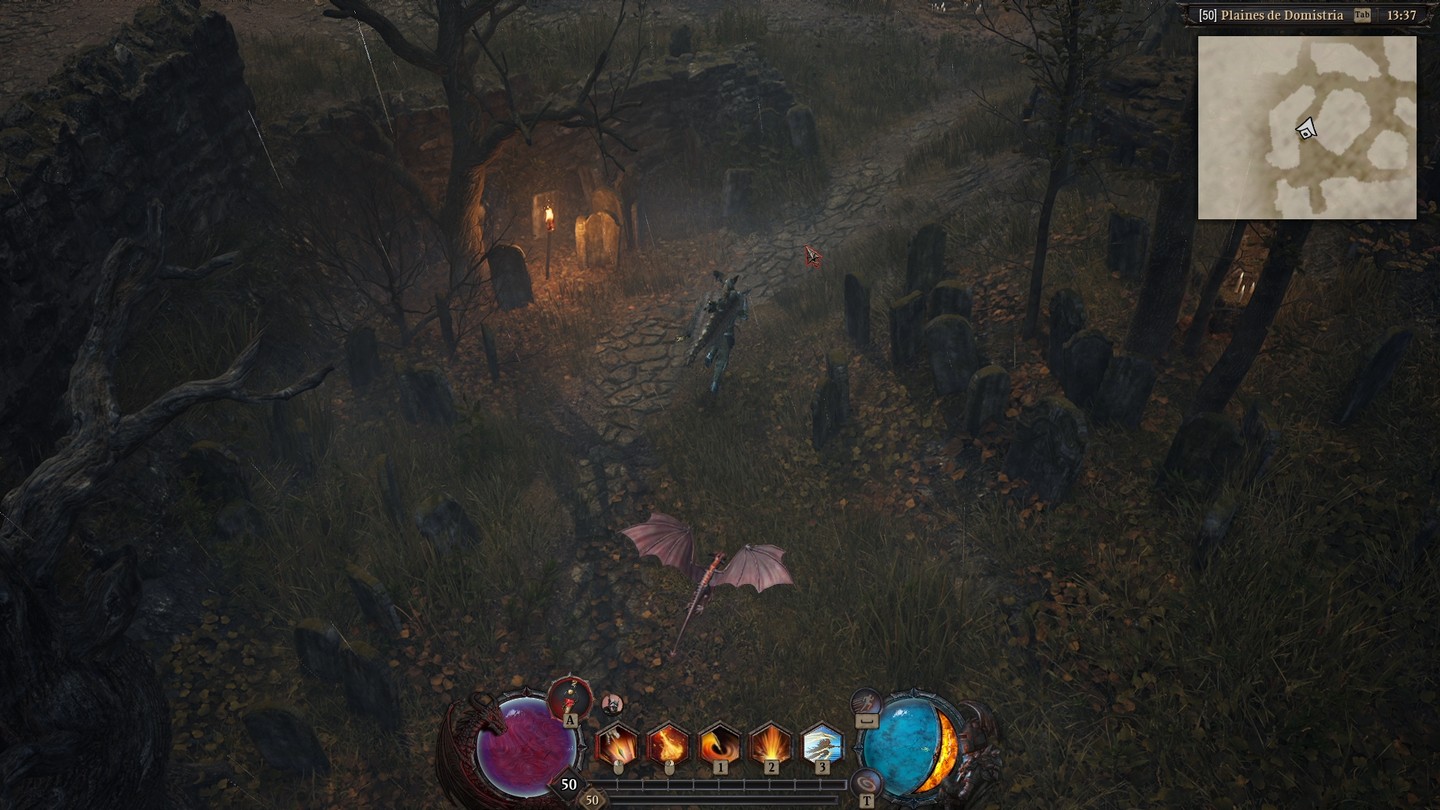
Players will also receive a small dragon companion called a wyrmling. It acts as both a thematic partner and a gameplay tool, providing passive bonuses and additional abilities that can amplify a build. Each wyrmling comes in an elemental flavor there is fire, lighting, poison and ice to chose from. Wyrmling choice is another way that players can add to their build, as mixing the effects is not only fun but can lead to some truly dominating gameplay. Freezing enemies in play with my wyrmling and then unleashing lighting storms above my enemies’ heads was my main way to play.
Outside of combat players will return to the city of Montescail, which will function as the hub for the adventure. Instead of the usual hub cities, in Dragonkin players will actually build the city as they level up and progress. New stores and equipment options will become available and there is even cosmetic choices that can be made. All in all the system is a small touch, but watching the city grow alongside me really helped to a better sense of progression.
Dragonkin: The Banished is by no means a bad game, but the problem is that for every clever idea, there is a rough edge lurking nearby. The presentation does the job but rarely impresses. Environments have variety, ranging from swamps to volcanic regions, yet they often blur together after extended play sessions. Enemy designs follow a similar pattern. There are some cool creatures mixed in, but a lot of the time players are hacking through enemies that feel more functional than memorable.
The pacing can also feel uneven. Early progression drips new mechanics slowly, and it takes a while before the deeper customization systems really open up. Once everything starts firing on all cylinders the game becomes much more engaging, but getting there requires a bit of patience. There is also a multiplayer option but its not server based like Diablo 4 and will have to have friends to play with. Sadly, I wasn’t able to test the functionality, not because I lack friends but because the game isn’t out yet. Ok, fine it is because I don’t have friends too, but that’s neither here nor there.
Dragonkin: The Banished is a good ARPG that occasionally hints at being a great one. Its progression systems show genuine creativity, and the combat is satisfying enough to keep players pushing forward. At the same time, the game struggles to fully distinguish itself from the heavy hitters that dominate the genre. That being said though, I really think this is one dragon hunt worth undertaking.
Review copy of game provided by publisher.