

BAD DATES.
When embarking on a quest to make a game one usually has to ask oneself a couple of questions. Chief among them, “Is it cool?”, and “is it fun?” The folks at MachineGames have no problem with the first question. In fact, it’s clear that they poured their hearts into making this the coolest, most authentic game they could. But when playing Indiana Jones and the Great Circle, I often found myself wondering if they ever actually asked themselves the second question at all. There’s a lot to like about this game, but I can’t think of a single moment during my time with it where I thought “this is fun.”
I’ve got a bad feeling about this.
Playing The Great Circle constantly reminded me of two other similar games; Metroid Prime and Uncharted. It’s very much a first-person adventure, like the Prime games, and it’s an archeology-focused globetrotting escapade, just like Uncharted. Unfortunately, The Great Circle never quite lives up to the high bar set by either of those series, which is especially disappointing considering just how much at least one of them pulls from the Indiana Jones property to begin with.
PLATFORMS: XBOX SERIES X/S, PC, PS5, SWITCH 2 (reviewed)
MSRP: $69.99
PRICE I’D PAY: $19.99
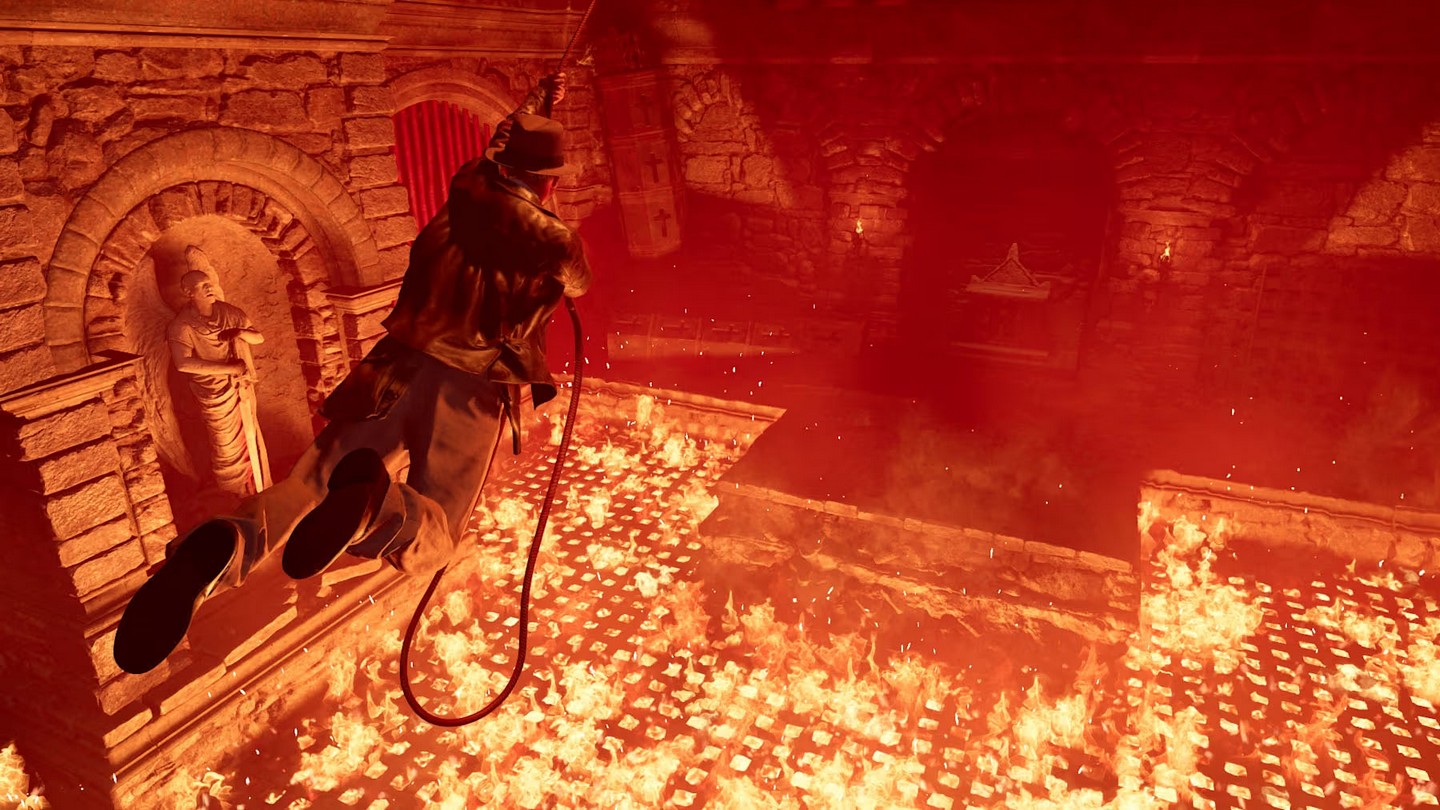
The biggest difference between Indy and those games, again, seems to be the general design philosophy behind it, specifically the all-important fun factor. Or to be more specific, the lack thereof. So, while yes, getting into fistfights with the classic meat slammer punching sound effects, and using Indy’s whip to acrobatically make your way up to high ledges are both inherently cool, none of it actually feels very good to do. When you use the Grapple Beam in Metroid Prime, great attention was paid to how it felt for the player to use it. In Uncharted, when you’re climbing ledges, the sense of scale and danger was ever-present, even in the lower stakes situations. In Indiana Jones, these things feel like a chore.
In fact, darn near everything feels like a chore. So many of the little things that pop up during your playtime seem like they were ripped straight out of the lowest point of the mid-2000s motion controls craze. The game constantly hits you with mundane tasks that require you to move the analog stick to perform. Clearing spider webs, opening doors, these all grind the game’s momentum to a halt, requiring you to stop, and effectively navigate a simple menu, not entirely dissimilar to ancient 8-bit RPGs where you needed to tell your character to climb stairs by selecting “stairs.” It isn’t nearly as irritating as that, but it’s inexcusably close for a game released in 2026.
The ultimate chore, though, would have to be the combat. The Great Circle wants you to be stealthy most of the time. I don’t know if it was just a skill issue on my part or what, but I constantly felt like I was failing miserably at remaining hidden, meaning I had no choice but to engage in fisticuffs and wow, what an absolute slog that is. It’s not that the controls are unresponsive, or even unintuitive, it just feels tedious.
The gameplay itself, though, was only a small part of why I was initially excited to play The Great Circle. What had piqued my interest, like Sean Connery finding a new clue for his Grail diary was all the talk about how much this new game captured the feel and spirit of a classic Indiana Jones flick.
This, most tragically of all, also left me feeling as disappointed as Indy waking up in a room full of snakes.
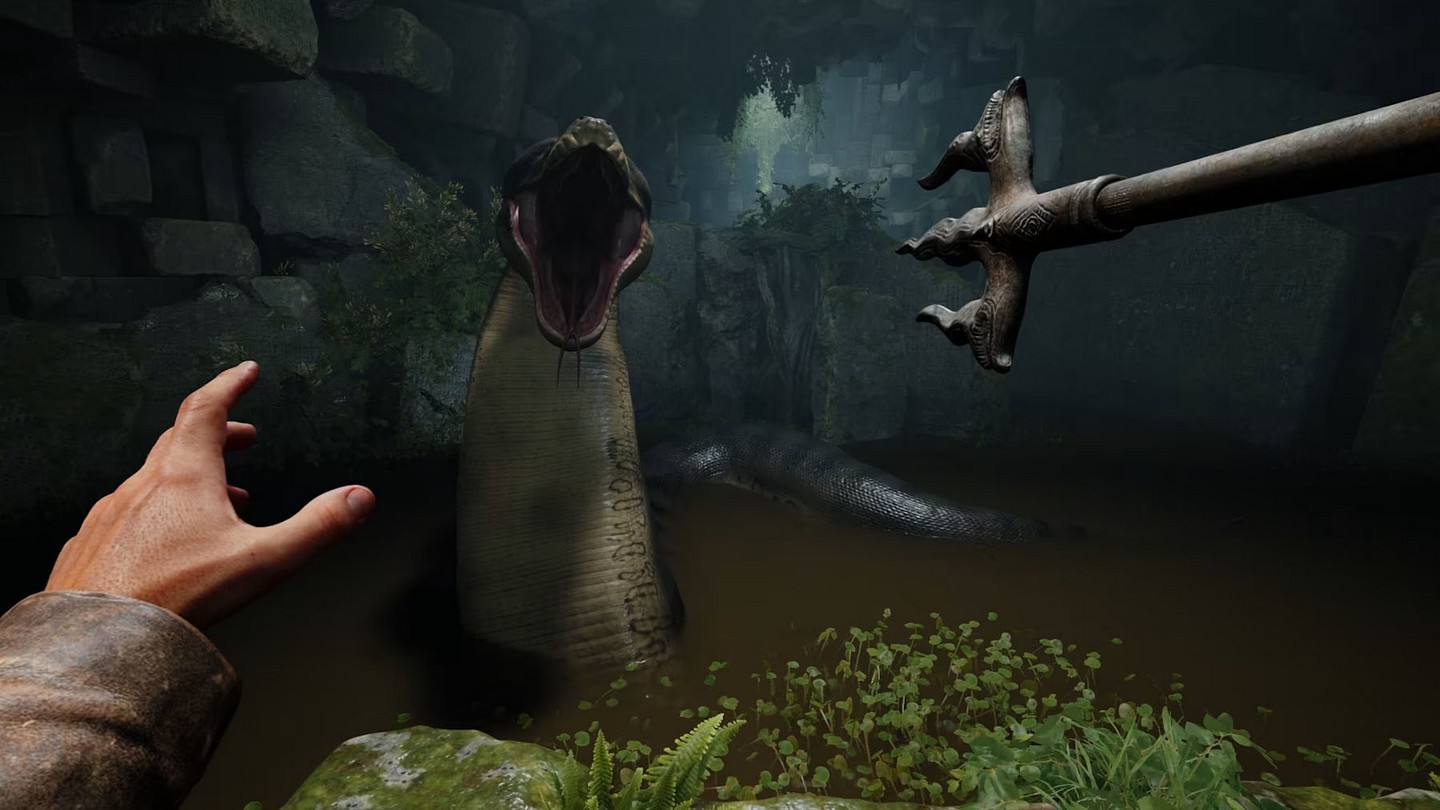
They chose… poorly
On paper, The Great Circle does everything right. The performances are generally well done, and the visuals are extremely impressive, but in practice, it never stopped seeming like it was merely doing an Indiana Jones impression instead of feeling like an approximation of the real thing. For all the care and effort that was clearly put into the game’s presentation, it’s still missing that specific Indy spirit underneath the surface. Everything from the facial animations to the unnatural way characters move to the stilted pacing of the cutscenes, make it feel like a video game that’s trying its hardest to emulate a tight, Spielberg-directed narrative, but can never quite pull it off. This constant sense of the game being at odds with itself makes the whole affair decidedly unfun, and decidedly not Indiana Jones.
For example, take the characterization of Adrian Brody. I know, this is going to sound nitpicky but bear with me. David Shaughnessy does an excellent job of imitating the late Denholm Elliott, but much like the character’s in-game face, his personality SEEMS spot on but is undeniably just a bit off. He’s too stiff, and he consistently calls Dr. Jones “Indiana” instead of “Indy.” Not that he never calls him that in the movies, but it’s pretty rare. Yet here, it’s every time. And every time it happened, it reminded me that this isn’t Marcus Brody. It’s an imposter.
Another example is an early puzzle where you are tasked with putting certain artifacts back in their display cases following a museum robbery. Not only is the puzzle itself incredibly mundane, but by its very nature, depending on how you play the game, it requires Indiana Jones to not know what he’s looking at. You pick up a piece and put it in the wrong case, and he confusedly mutters to himself “no, that’s not right” and while that’s important to being able to make this kind of situation work in a game where the player has to have the ability to make mistakes, Indy the character wouldn’t make those mistakes. So, the whole scene feels completely out of character AND boring at the same time! Again, I know it’s nitpicky, but when so much of the game’s success relies on it pulling off a very specific atmosphere, those little things pile up faster than a swarm of Saifu ants.
Of course, if you’re reading this review, you probably want to know how the Switch 2 version in particular holds up against its big brothers running on vastly more powerful hardware. I’m glad to report that it does a very, very impressive job, particularly in still shots. Side by side, they’re nearly identical. The framerate is consistent most of the time, and everything looks almost exactly the way it should. However, some of the issues present in the other versions are exacerbated on the less powerful Switch 2. Most notable of which is texture pop-in. It doesn’t help that the game opens in a jungle scene where dozens upon dozens of leaves have to be rendered simultaneously, but the occasional pop-in seen in the Xbox version is a near-constant distraction on Switch 2. Thankfully, the majority of the game doesn’t suffer quite as bad as that first area, but it’s still a noticeable issue. Other than that, I wouldn’t be surprised to learn that the team at MachineGames had their own set of Sankara stones, because they worked some serious magic on this one. Well done.
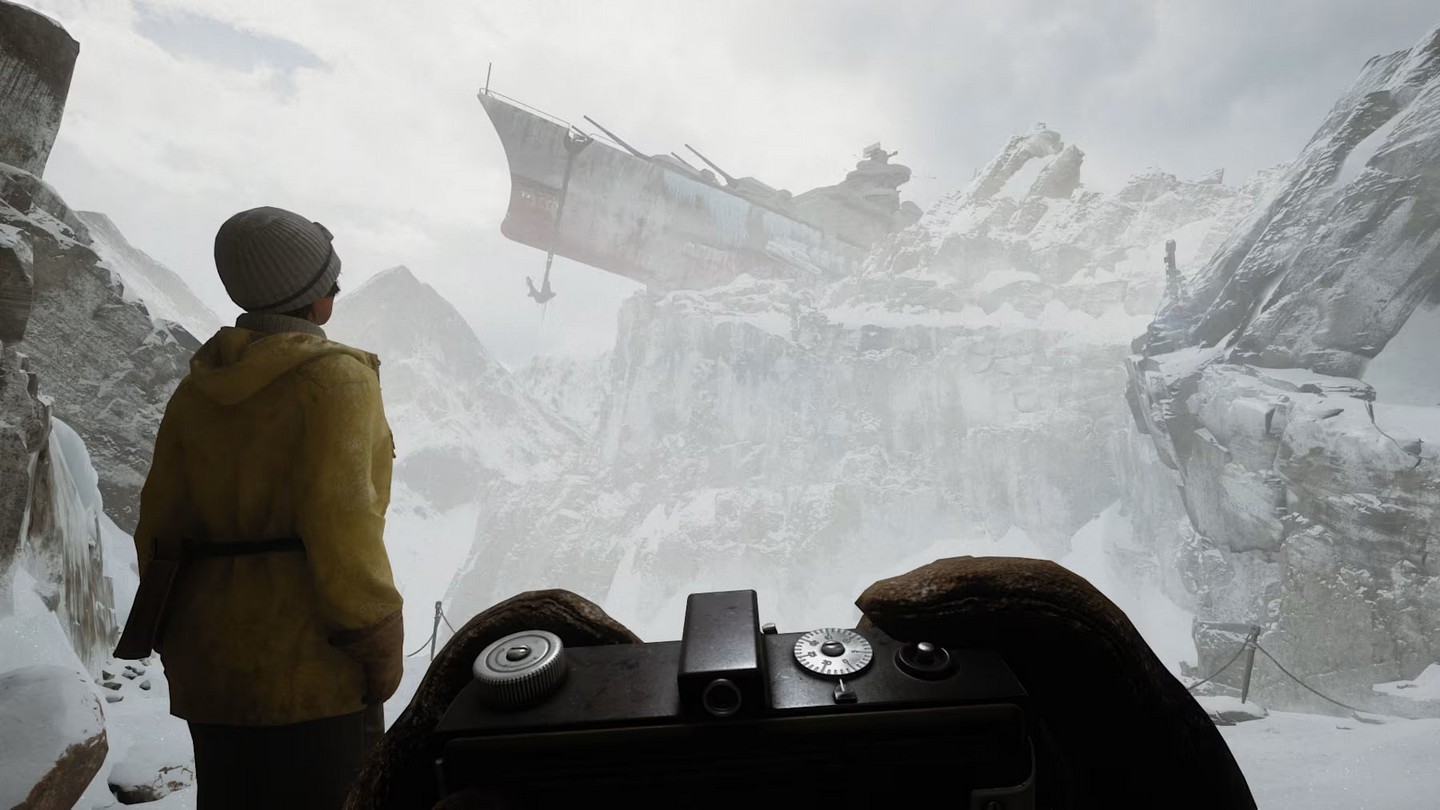
It’s not all bad in the gameplay department, either. There are some pretty great puzzles to solve that transcend the Indy personality problem, the environments do occasionally invoke that sense of discovery you’d get in the movies when they did things like find the Tomb of Sir RIchard in The Last Crusade, and the story itself also does get quite interesting. The soundtrack and general presentation make it rather enjoyable to see unfold, but no matter how much you travel by map or come across a familiar font from the films… well, a friend of mine put it perfectly when he said that this is a great Indy story, but I don’t want to watch a 10-hour Indiana Jones movie, which is precisely what this feels like. It’s often difficult to tell what the actual “game” in this game is, making it more like an interactive movie, and even in that regard, for as good as it is, games like Uncharted completely outclass it.
Fortune and glory? Not so much.
I wanted to love The Great Circle. I really did. I’m a huge fan of all five Indy movies (yes, I liked all of them, and no, Crystal Skull isn’t the worst one!) But when it comes to translating Indy to an interactive medium, that’s a tough nut to crack, especially when your game is more about trying to recreate the movie experience than game-ifying the essence of what an Indiana Jones story is. That’s why stuff like The Fate of Atlantis, and even the oft-misunderstood Raiders of the Lost Ark on Atari 2600 succeed, because they’re about making you, the player, do the Indiana jones stuff, not making an interactive impersonation of a CG Harrison Ford do Indiana Jones stuff while you occasionally press buttons and look around.
I can recognize the effort put into making this game, and I’m extremely happy to see it looking so good on Nintendo’s platform, but for my money, this one belongs in a museum, not your Switch 2.
Review copy of game provided by publisher.