


In the Groove
As someone who has been playing rhythm games even before the release of the first entry in the Guitar Hero series, it’s safe to say that I’ve played my fair share of games from the genre. Among some of my favorites was Rhythm Heaven on the DS. While rhythm games were getting more and more complex at that time, adding more mechanics and buttons, Rhythm Heaven with its minimalistic approach showcased that sometimes simple is best. While only using very simple controls, it managed to be fun and engaging with its charming visuals and varied scenarios.
So, after a hiatus of over a decade, it was announced that the series was finally making a return, I was eager to check it out.

There are dozens of stages, the most in series history so far.
MSRP: $39.99
Price I’d Pay: $39.99
Platforms: NSW, Played on NSW2
Length: 8~ hours, high playtime variability due to many unlockables and medals chasing
As noted, before, Rhythm Heaven is a game that shines with its minimalist approach, and it remains true for this latest entry as well. There’s no overlapping story or narrative to follow, it is simply a series of stages with its own scenario. Being fully controlled with either one or two buttons, the stages started with a tutorial to get me familiar with the controls, the rhythm and the types of patterns I should expect.
If I were to try to play the game based strictly on the visual cues, the game would be very difficult and potentially even impossible in certain parts as it does require very precise inputs. Thankfully, when playing the game to the rhythm, even when the visual cues are obscured, I could hit the cues without any issue. This is a testament to the excellent stage design and music sync that it is always providing clarity of information necessary to play on cue. There are a great number and variety in the stages as well and while some of them are harder versions of existing stages, they add just enough to them to make them feel new again.
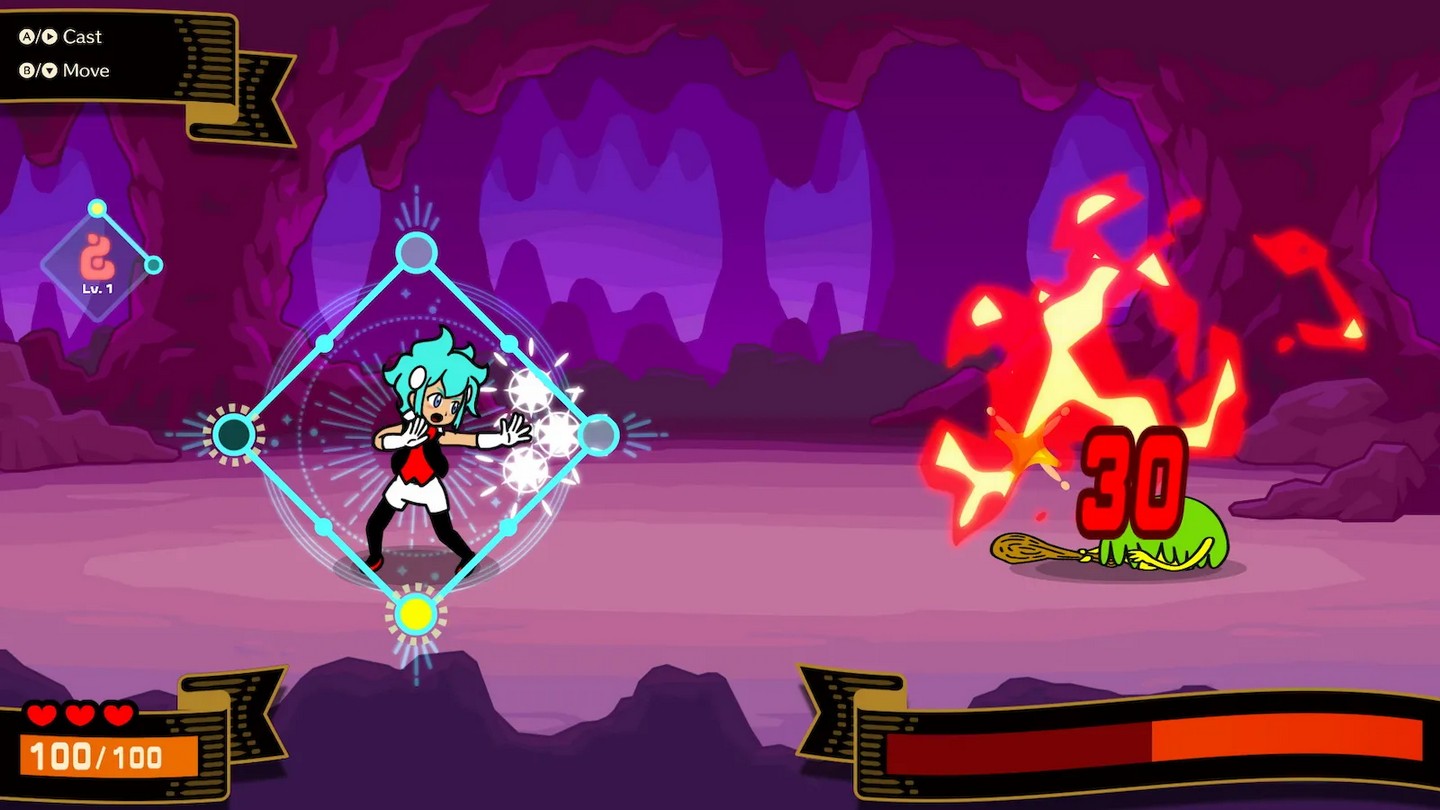
There are mini-games to unlock and play, some of them providing some of the toughest challenges the game has to offer.
Outside of the stages, there are mini-games that can be unlocked. While I prefer the main stages (especially the stage end remixes) to go back and play again for fun, these offered some interesting scenarios that mixed up the formula. One which was heavily highlighted was like a boss rush mode where spells/abilities were designated to a certain rhythm/input which needed to be constantly alternated depending on the situation.
There was also the inclusion of a multiplayer mode which ended up being quite fun. Although it understandably doesn’t have online play due to the need for strict timings, gathering a few friends together to see who had the best timing/reflexes was much more entertaining than I expected. My favorite of the multiplayer stages was the one where all the players remained sitting in front of a slice of cake and the person who picks up the cake closest to the specific time would get the cake.
The game played in rounds and as the difficulty level was raised, the more tense things became- so much to the point that I noticed that I was holding my breath without thinking about it at times. As I didn’t play the multiplayer mode in the Wii release, how flushed out and fun the multiplayer ended up being took me by surprise and I’m certain to go back to it whenever I have friends over.

As someone that’s always viewed Rhythm Heaven as a single player game, I was pleasantly surprised by how fun the multiplayer mode was.
As for the negatives, there are some rather odd decisions that make it seems as though they were cutting corners with the game’s production. First, is the heavy use of text-to-speech which is very monotone and simply does not fit the game’s charming aesthetics. It’s the kind of text-to-speech I tried using on an old Windows PC for novelty’s sake and I didn’t like it then and I don’t like it now. It’s not like there’s that much text in the game, surely, they could’ve gotten a VA if they wanted to have it voiced or leave it unvoiced if they were going to half-ass it. The UI also deserves a mention as the menus felt clunky and quite uninspired, like they were using a free template. Once again, for a game that’s packing so much creativity and whimsy, it felt totally out of place. Luckily, I was able to disable the text-to-speech function, and the menu was only seen when changing modes or booting up the game but it’s a stain on an otherwise great package.
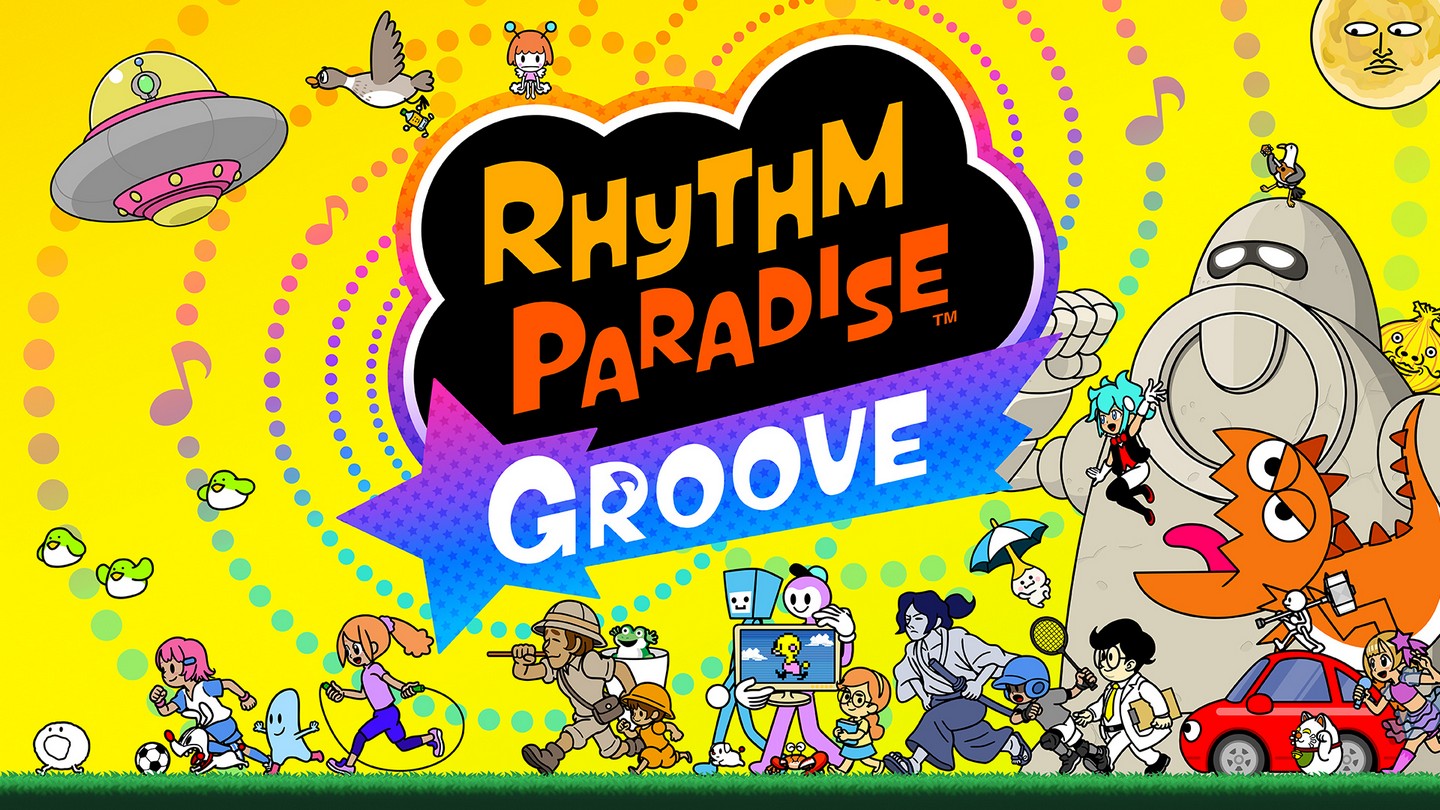
The aesthetics of Rhythm Heaven are wonderful, and it deserves VA and UI that match its charm.
Despite the issues with some parts of the presentation, Rhythm Heaven Groove is a great entry in the series, featuring a ton of catchy tunes and fun scenarios. It’s a welcome return to one of my favorite series and an easy game to recommend to just about anyone, regardless of their familiarity or skills with the genre.
Fun Tidbit: I was surprised when I got to the final remix stage and recognized the singer as the iconic Ado, a popular Japanese singer that I started listening to not too long ago.
Review copy of game provided by publisher.