

Let me play among the stars
I’m going to be honest, a one-button game is not usually what I go looking for. I’m the type of gamer who wants a bunch of buttons, a bunch of menus and a bunch of stuff to do. But every once in a while, a game comes along that makes me eat my words, and Faraway, from solo developer Steph Thirion and publisher Annapurna Interactive, did exactly that.
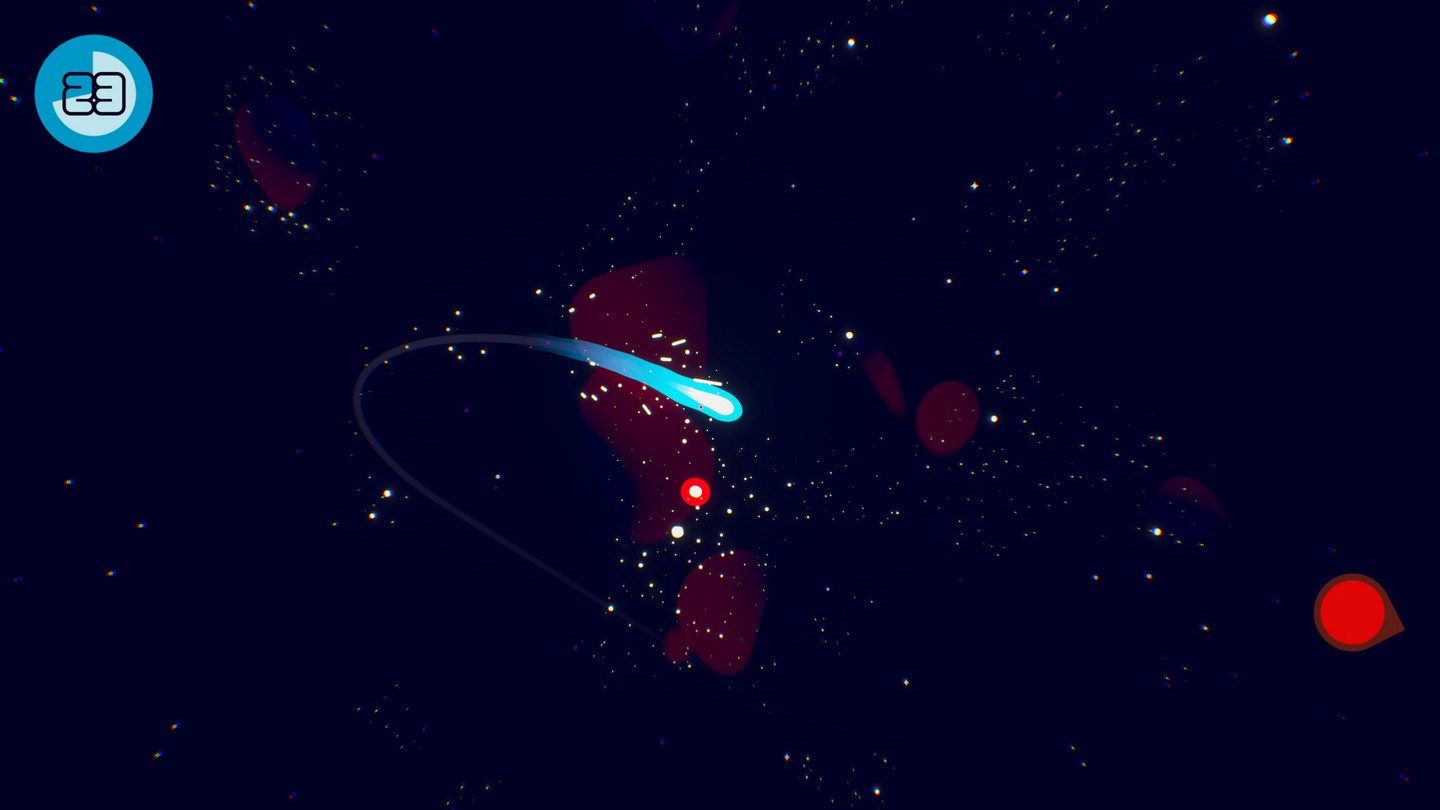
The premise is as simple as it gets. You’re a glowing shooting star drifting through a randomly generated galaxy, and you have to keep yourself alive by creating constellations. There’s only one button. You press it to launch yourself between stars, and everything depends on gravity, momentum and timing. There’s a countdown ticking down, so you need to reach safe zones before time runs out. Connecting stars into constellations buys you more time, and bigger constellations give bigger rewards. If you fail, your little spark slows down and becomes another star in the sky, which is honestly a kind of beautiful way to lose.
MSRP: $7.99
Platforms: XBOX (reviewed), PlayStation, Switch, PC
Price I’d Pay: $7.99
Now, if you’re thinking this sounds like a chill, relaxing experience, well, yes and no. It’s dressed up like a calm game, but it can get really tough. You have to think about which direction you’re moving, how your momentum will carry you and what order to approach each star in. Let go of the button a hair too early and you’ll fly off in the wrong direction. Move too fast and you’ll miss your target completely. I admit there were a few times I had to put the controller down, because even simple-looking constellations could take me several tries. It’s not as bad as me trying to complete jumping puzzles but I failed a lot here. But what I appreciated is that every failure felt like MY mistake, not the game being unfair. With just one button, there’s nowhere else to put the blame.
That also makes the successes feel so good. There’s a point where things just click, where you stop fighting the gravity and start working with it, and then you pull off a big constellation. The soundtrack deserves a lot of credit here too, because the music responds to what you’re doing, so every successful move and finished constellation feels like part of a song. It’s a really satisfying loop, and I found it dangerously easy to say, “one more try.”
Visually, Faraway keeps it simple with glowing stars, a restrained color palette and uncluttered space. It’s not trying to push the limits of the Series X, and it doesn’t need to. Simplicity actually helps, since it keeps your eyes on what matters, which is where you’re going next.
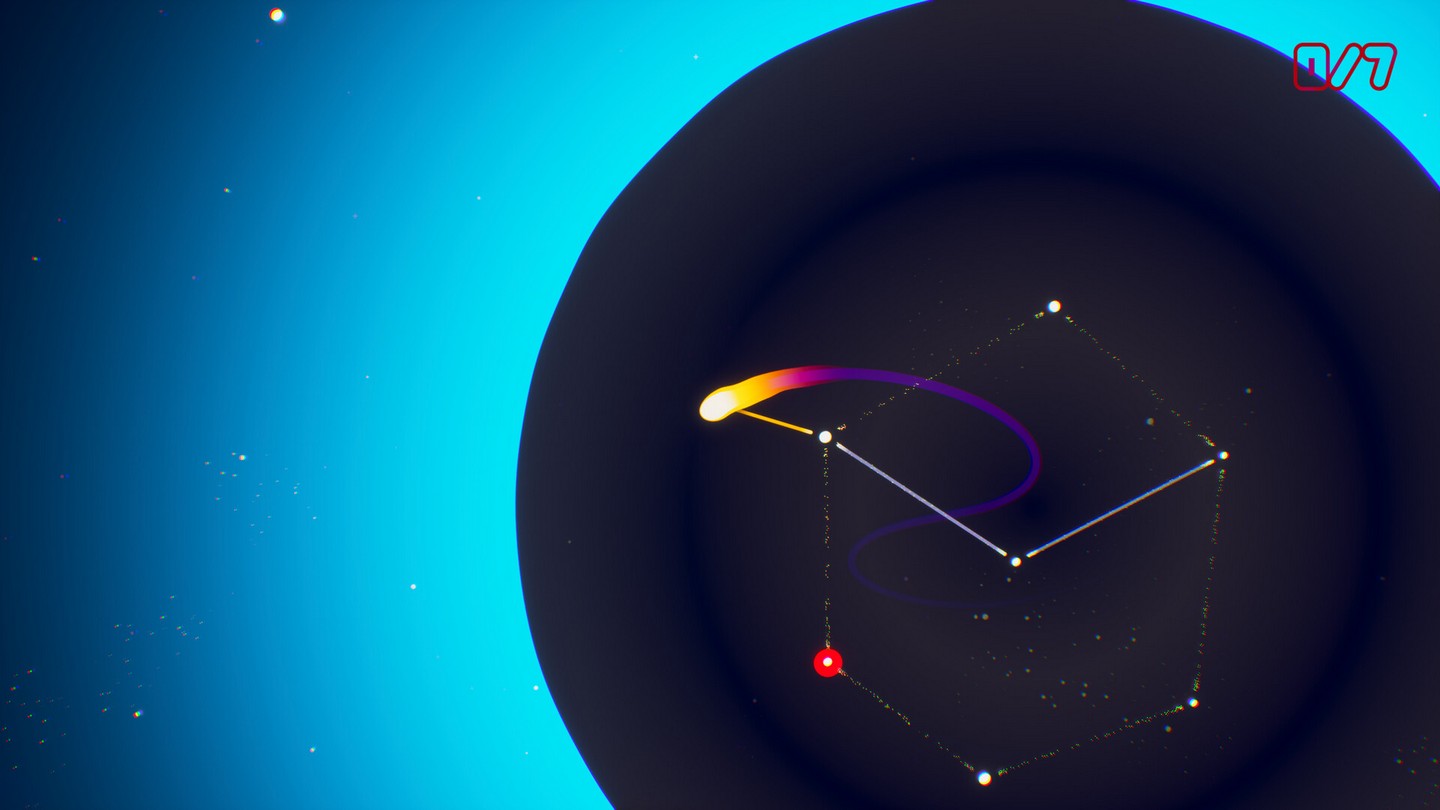
My one real complaint is the menus. They look nice, but they were confusing at first. It took me a minute to realize how to actually get into the main game, because the game’s lighthearted storytelling kind of buries the fact that the central orb is how you start. It’s a small thing and it didn’t affect me once I got going, but a clearer menu would help new players get into it.
Faraway is another great addition to Annapurna’s lineup of unique indies, and it proves a game doesn’t need a huge budget or a pile of buttons to be great. It’s short-session friendly, so you can play for a few minutes or a few hours. If you like a challenge dressed up in a pretty package, Faraway is well worth your time.
Review copy of game provided by publisher.