

This is not Marvel vs Capcom
As a long time fighting games fan, tag fighters have never really been my favorites of the genre. My personal tastes aside, it’s undeniable that classics like Tekken Tag Tournament, DragonBall Fighterz and of course, Marvel vs Capcom have been hugely popular and influential. While new tag-fighters have come and gone recently in a wave, none of them quite stuck the landing required to become a new staple in the genre.
Now, with one of the best devs to ever do it in Arcsys taking on the reins of one of the most popular and recognizable IPs in the world, I hoped that they would be the ones to create a new instant classic. The result however, is a bit of a mix bag.
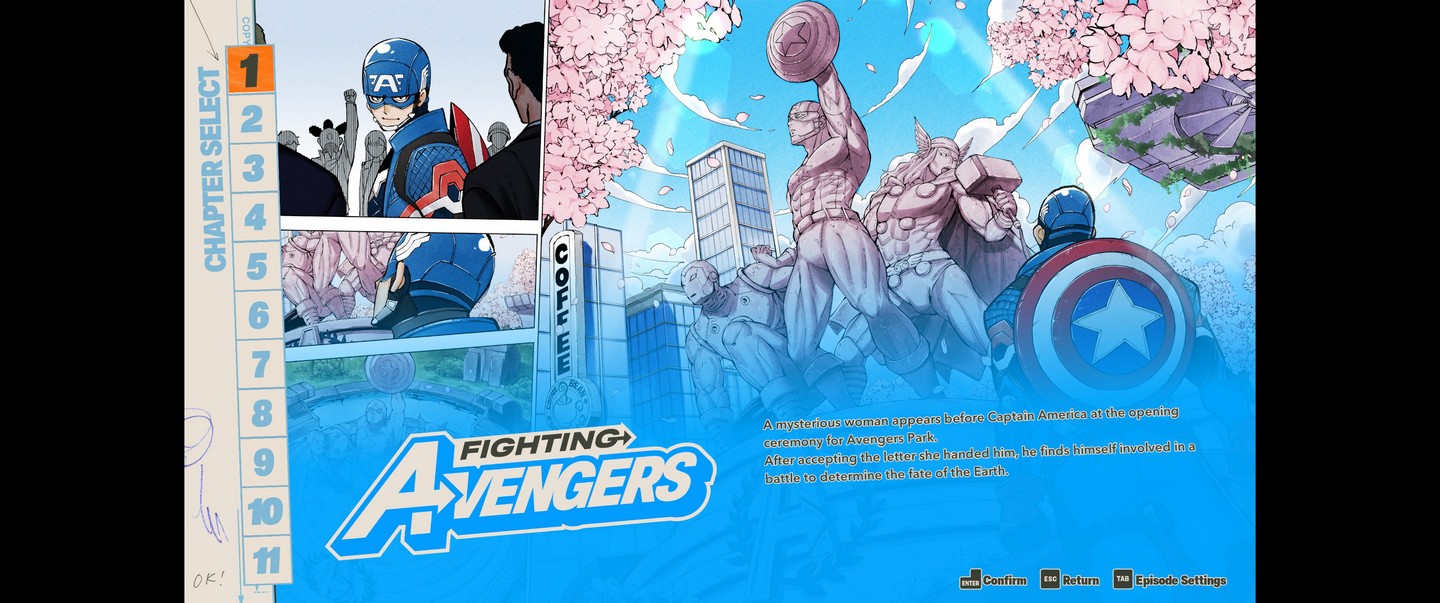
I appreciated the inclusion of a story mode for each of the teams but wish they were more interesting.
MSRP: $59.99
Platforms: PC, PS5
Played on: 9800X3D, RTX 5080, 64GB RAM.
Played: 25~ hours
As a spacefaring tyrant known simply as “The Champion” invades earth and challenges its greatest warriors to battle for the fate of the Earth, various factions rise to the challenge, seeking to protect the world in their own way.
Given that this is a fighting game, I did not go in expecting much of a story and got just about what I expected. While there is a story mode that follows each of the teams, the setup and conclusion are all basically the same. Gathering the allies, fighting the other teams and finally besting the Champion. It’s serviceable enough as a reason to fight and I won’t hold it against the game much for going through the motions in that regard, but it certainly doesn’t warrant any extra considerations either.
The single player offerings are relatively sparse with a tutorial, character trials, a pseudo-arcade mode, survival and a mode called Arcadia Rumble which could be played both single/multiplayer. It played like a weird mix of different game types and after completing it once, I never had the desire to go back to it again. In fact, I would’ve much preferred a challenge gauntlet where I had to fight like 10-15 battles in a row without any fluff, but it is what it is.
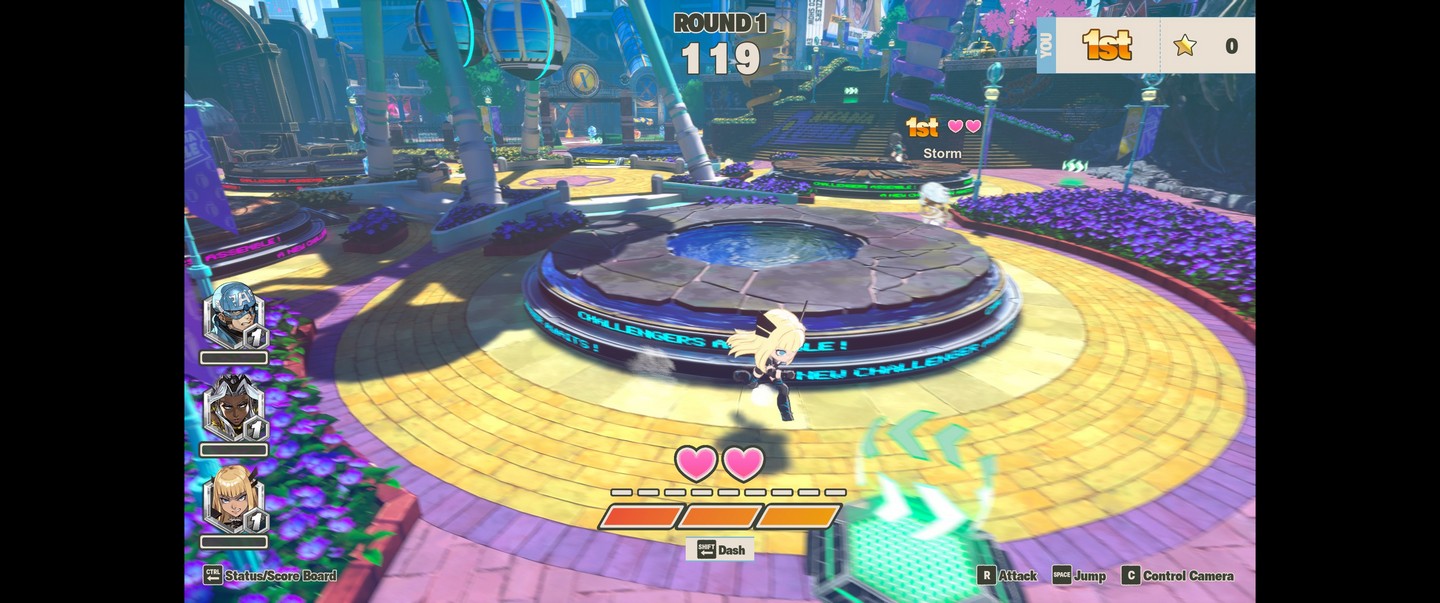
This is a hard mode to describe and not worth the time since it’s really not fun nor interesting.
To get to the meat of things, the unique combat system of Tōkon revolves around the concept of 4v4. This might seem daunting at first given learning a single character to play competently is a time investment, having to learn 4 seems like a bit too much to ask for. As if the devs were quite well aware of this factor, they’ve mitigated the sentiment by making it so that all the characters share one singular life bar.
The common tactic of swapping out a character so they can regenerate their health is not at play here and it’s entirely feasible to use one character on point the entire match. The other characters in turn could be used simply as assists and where they are placed in the team governs the kind of assists they provide. Having said that, there are clear advantages and strategies that unlocked once I became familiar with using multiple different characters and swapping into them became second nature to extend combos/pressure but unless you plan to play at a high level, it’s not a complete necessity.
Another interesting thing about the mechanics is that not all the characters are unlocked from the get-go and have to be unlocked either by pulling off stage transitions or by losing a round. Starting with only the point and one assist character, the first round is usually the least chaotic and most measured. After both players have unlocked all assists, the visual clutter and chaos on screen can get a bit much to follow but it adds a layer of strategy to prioritize screen transitions over max damage combos until the full team is ready to go.
Tōkon also features simple specials which will execute special attacks with a direction and one button which makes executing some of the more complex combos a breeze and is a nice addition for those that prefer to play using that. My major issue with the actual gameplay was in the loose inputs that would execute a special attack, the main offenders either being a 22 (down down) or 623 (forward down forward-down) motions that would constantly come out when I did not mean it to. I cannot tell you how many times specials came out when I didn’t want them while just moving around and pressing buttons on neutral/pressure. Sure, there are certainly times I make quick inputs in other fighters that result in mis-inputs, but I’ve never seen it happen this much, ever. It must be the way the inputs are generously accepted as a special and I’ve tried different controllers and the results were about the same.
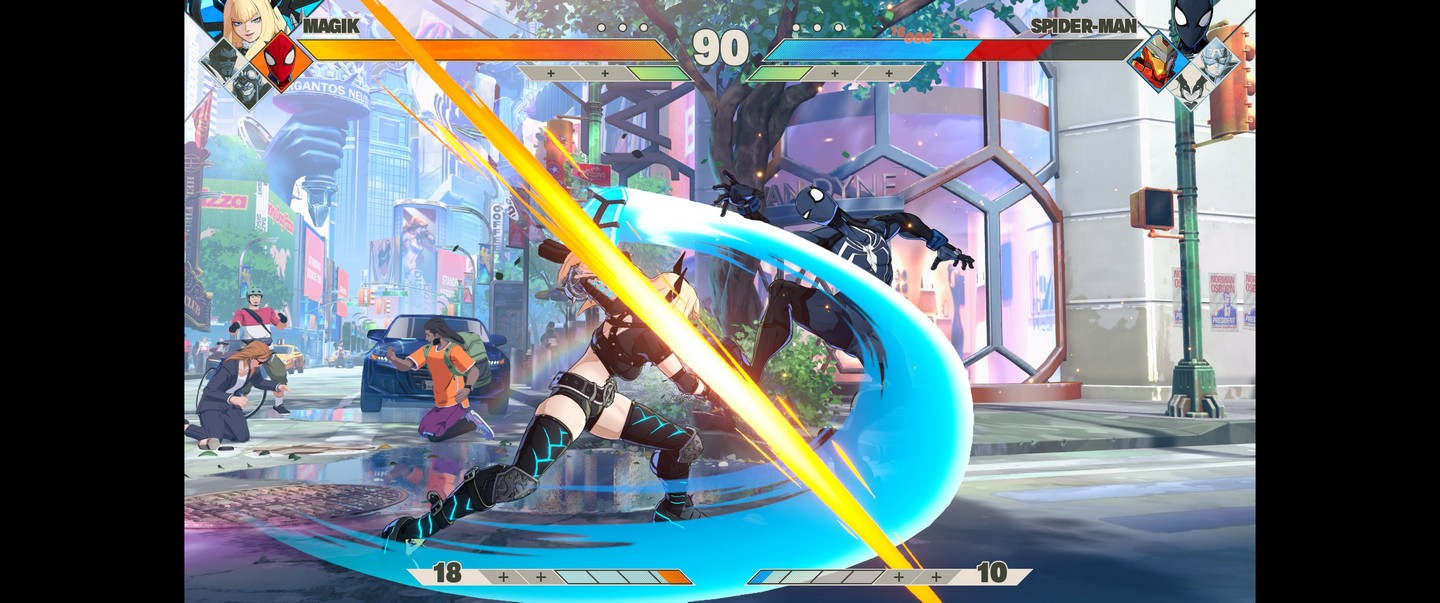
Either my fingers are turning into putty or there’s something off about the way inputs are handled in this game.
As for the highlight, it is most definitely the characters and how well they’ve been brought to life. Even though it is pretty simple to pick up and play as all specials/generic combos mostly share the same input, every character has a unique element about them that makes them stand out. Magik, who was my main character for the course of my play time, has the ability to summon portals to different locations. It takes a second or two to summon a portal, leaving me vulnerable for that moment but it’s well worth it as the portal opens up a plethora of benefits and options.
For example, if I shoot a fireball into the portal, another portal will open up behind my opponent and the fireball will come shooting out, adding pressure or extending combos. I could also use portals as a mix-up tool as I could choose to exit a portal on the opposite side of my opponent, creating tricky left or right mix where sometimes I wasn’t even sure which direction my opponent should be blocking. Testing out various different team compositions to compliment Magik, figuring out oppressive block strings and setups in training mode is where I spent most of my time and I had great fun there. As I tried each new character, I could feel the tremendous amount of love and effort that went into creating each character. In fact, someone could easily write a thesis on Deadpool, pointing out the influences/references that make up that character alone. Given how great the characters were, I couldn’t help but feel that 21 was a small roster for a 4v4 game and was left wanting more.
When I took the game online, I was able to wait for matches while in training mode which is a feature I always appreciate and playing against others showed me the potential of other characters/teams and I generally had a positive experience online after the most recent patches. There were a handful of laggy matches and some drops even though it was showing low ping and we were both on wired connection. At least it wasn’t like it was in the first week of release where it was so bad that I simply bounced off the game for over a week until some patches came out.
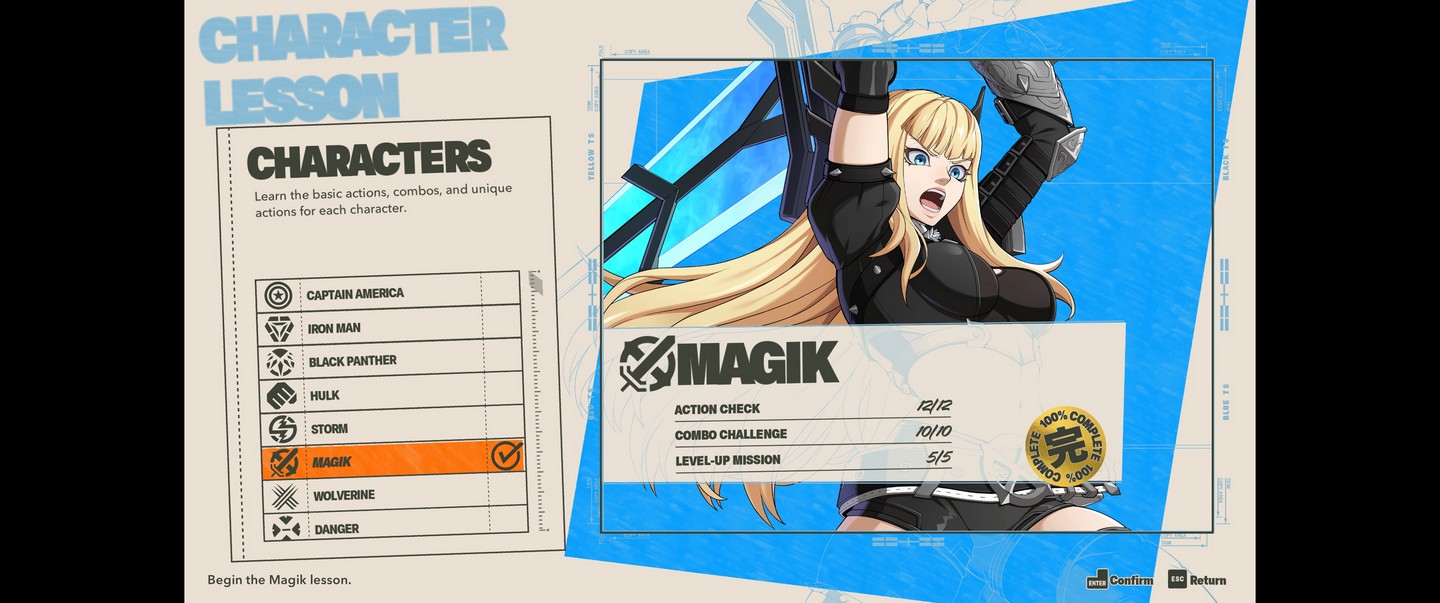
Sometimes how much you end up liking a fighter is if you can find a character you have fun playing, I was able to find two, but not four.
MARVEL Tōkon: Fighting Souls is not Marvel vs Capcom and it was never trying to be, despite how desperately many people seem to want it to be. While the issue with inputs, pc performance and a lackluster roster had a lot of people bouncing off the game in the first week of release, I’m glad I stuck around and gave it more time as I’ve discovered that it’s a solid foundation that could become something truly special with a few iterations.
Fun Tidbit: The OST for a fighting game is surprisingly important since you end up hearing the same songs endlessly and Tōkon has one of the best in recent releases.
Review copy of game provided by publisher.